Start with what the enamel can handle
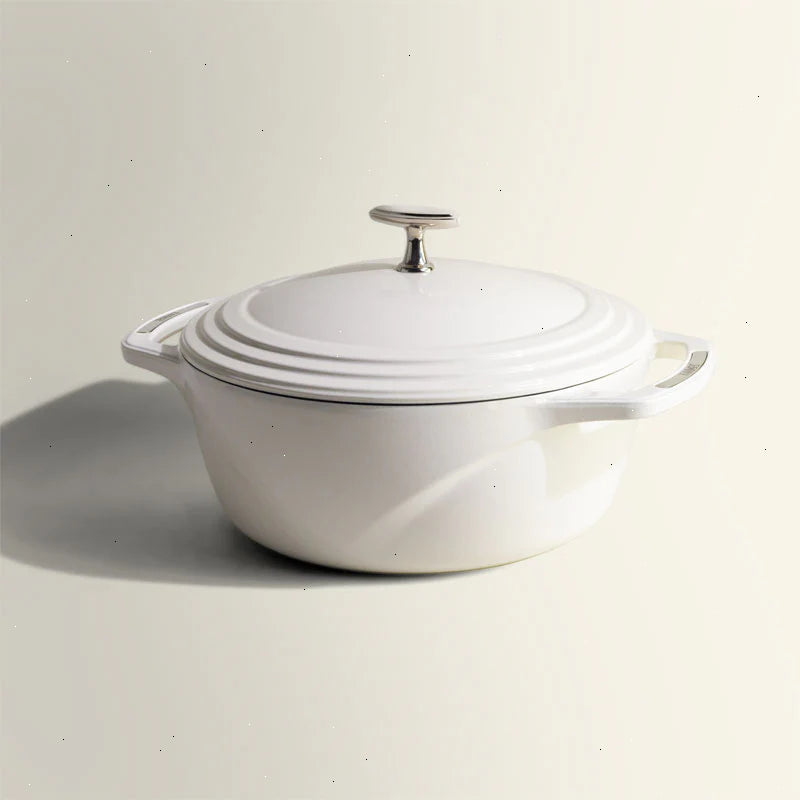
The USA Enamel Cast Iron Dutch Oven brings together the heat retention and durability of cast iron with an enameled surface that can withstand acidic ingredients—think tomato sauce, wine braises, and long-simmered Sunday sauce. That acid resistance is the main reason enameled cast iron is easier to live with than bare cast iron, but it doesn't make the finish indestructible. A few simple habits will keep the color looking new and the surface cooking well.
Because the catalog doesn't list specific cleaning products, dishwasher compatibility, or temperature limits, treat the guidance below as general best practice for enameled cast iron rather than a manufacturer's instruction. When in doubt, choose the gentler option.
A simple cleaning routine after every use
The goal is to remove food and acidic residue without scratching or shocking the enamel. Work through these steps once the pot has cooled.
- Let it cool completely: Don't run a hot pot under cold water. Thermal shock can crack enamel, and the catalog doesn't specify a safe temperature range, so cooling on the stovetop is the safest default.
- Use warm water and a soft sponge: A non-abrasive sponge or dishcloth with mild dish soap is enough for everyday cleaning. Avoid steel wool, scouring pads, and harsh abrasive cleansers that can dull the glossy finish.
- Soak stuck-on food: If food has baked on, fill the pot with warm soapy water and let it sit for a while before wiping. This loosens residue without aggressive scrubbing.
- Dry thoroughly before storing: Towel-dry the pot and lid, then let both air-dry fully with the lid off. Storing a damp Dutch oven can trap moisture and lead to odors or surface issues.
Preventing and treating enamel stains
Stains on enameled cast iron are usually cosmetic—tea, coffee, tomato sauce, and hard water can leave a brownish or cloudy film. The catalog doesn't list a specific stain-removal product, so start with the gentlest approach: a paste of baking soda and water applied to the stain, left for a few minutes, then wiped with a soft sponge. For more stubborn marks, a dedicated enamel cleaner designed for cookware is an option, but test it on a small area first.
Avoid bleach and highly alkaline cleaners unless the manufacturer explicitly approves them; they can dull or discolor the enamel. Also skip metal utensils that can leave gray marks—silicone, wood, or plastic tools are safer for the finish.
What the catalog confirms about this Dutch oven
- USA Enamel™ Cast Iron Dutch Oven: Enameled surface can withstand acidic ingredients. You can cook tomato-heavy sauces and wine braises without worrying about the reactive surface of bare cast iron.

USA Enamel™ Cast Iron Dutch Oven - USA Enamel™ Cast Iron Dutch Oven: Combines cast iron's heat retention and durability with an enameled surface. The pot holds heat steadily for long cooks, while the enamel makes cleanup and acidic cooking easier.
- USA Enamel™ Cast Iron Dutch Oven: Made in the USA—the first enameled cast iron of its kind made on US soil. If domestic manufacturing matters to you, this is a documented point of difference.
- USA Enamel™ Cast Iron Dutch Oven: Available in 3, 4.5, 6, and 7.5 quart sizes, with color options including Cherry On Top, Smooth Sailing, Cloud Nine, and Moonstruck. Size and color availability vary by variant; check the specific combination before ordering.
Dishwashing and the limits of the supplied information
The catalog does not state whether the USA Enamel Cast Iron Dutch Oven is dishwasher-safe. For enameled cast iron in general, hand washing is the safer choice because dishwasher detergents and high heat can dull the finish over time. If you want to preserve the bright color, treat hand washing as your default and reserve the dishwasher only if the manufacturer confirms it's acceptable—which the supplied information does not.
Similarly, the catalog doesn't list oven-safe temperatures, broiler safety, or stovetop compatibility. Those details matter for high-heat roasting and searing, so check the product's packaging or the manufacturer's website before pushing those limits.
Storage and handling habits that protect the finish
Enamel chips most often happen during storage and handling, not cooking. A few small adjustments make a difference.
- Stack with a barrier: If you nest other cookware inside the Dutch oven, place a soft cloth or paper towel between the surfaces to prevent scratches and chips.
- Store the lid separately or ajar: Leaving the lid slightly open allows airflow and prevents trapped moisture and odors.
- Lift, don't slide: Slide the pot on the stovetop only when necessary; lifting avoids abrasion on the base and reduces the chance of knocking the rim against a burner grate.
- Inspect the rim: The exposed cast iron rim is the most vulnerable point for chips. Check it periodically and avoid banging the lid down.
When to stop using a chipped Dutch oven
A small chip on the exterior is usually cosmetic, but a chip on the interior cooking surface can expose the cast iron underneath. That exposed iron can rust and may react with acidic foods. The catalog doesn't provide a repair or warranty policy, so if you notice interior chipping, contact the manufacturer for guidance before continuing to cook with it.

