
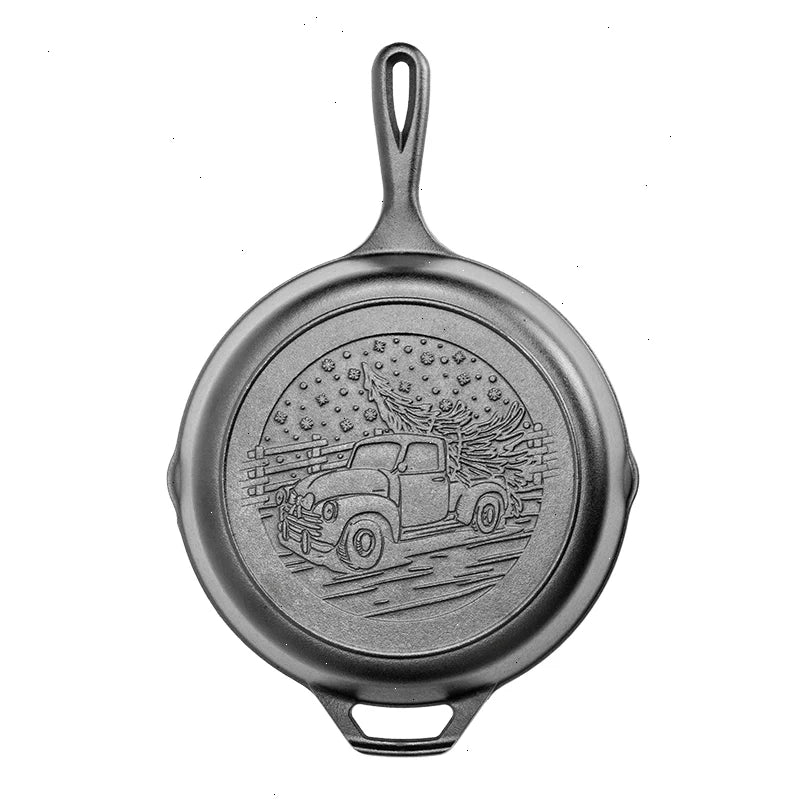
Start With the Seasoned Surface You Already Have
The Lodge 10.25 Inch Seasoned Cast Iron Holiday Truck Skillet arrives with a naturally seasoned cooking surface that is ready to use straight from the foundry. That factory seasoning is your starting point—not a finish line. A few consistent habits will keep the surface dark, smooth, and resistant to rust, whether the skillet lives on your stovetop or comes out once a year for holiday baking.
Because cast iron provides great heat retention, this skillet works well for recipes that need steady warmth, like a large skillet cookie. The same qualities that make it a good baking pan also mean it holds onto moisture if stored damp, so drying thoroughly after every wash is the single most important care step.
The Skillet in This Guide
- 10.25 Inch Seasoned Cast Iron Holiday Truck Skillet: 10.25 Inch Seasoned Cast Iron Holiday Truck Skillet with a naturally seasoned cooking surface ready to use straight from the foundry. You do not need to perform a full initial seasoning before first use; focus on maintaining the existing layer.

10.25 Inch Seasoned Cast Iron Holiday Truck Skillet - 10.25 Inch Seasoned Cast Iron Holiday Truck Skillet: Cast iron provides great heat retention. Expect the pan to stay hot after removal from heat, which affects how quickly you should dry and oil it.
A Simple Cleaning Routine for the Holiday Truck Skillet
The supplied product information does not include a manufacturer-specific cleaning procedure, so the steps below are general best practices for seasoned cast iron. Always defer to any care instructions that come with your skillet.
- Scrape off food while the pan is still warm: Use a stiff brush or scraper to remove stuck-on bits. Warm cast iron releases food more easily, and you avoid soaking the pan.
- Wash with hot water and a small amount of mild soap if needed: Modern seasoned cast iron can handle a brief soapy wash. Avoid harsh detergents, steel wool, and long soaking, which can strip seasoning or encourage rust.
- Dry immediately and completely: Towel-dry, then set the skillet over low heat for a minute or two to drive off residual moisture. Do not leave it air-drying in a rack.
- Apply a thin layer of cooking oil: While the pan is still warm, wipe on a very thin coat of neutral cooking oil. Buff off excess with a paper towel so the surface does not feel sticky.
Why Rust Prevention Matters More Than Ever for a Holiday Pan
A holiday-themed skillet often spends more time on display than a daily-use pan, which changes the care rhythm. Moisture from humid air, a damp cabinet, or a single missed drying step can start surface rust. The fix is straightforward: keep the pan dry, keep a thin oil barrier in place, and check it before and after each storage season.
If you notice a small spot of rust, scrub it away with a stiff brush and warm water, dry the pan thoroughly, and re-oil. For heavier rust, a gentle scouring pad followed by re-seasoning may be needed. The supplied information does not include a specific rust-removal protocol, so use your usual cast iron method and avoid aggressive tools that could scratch the cooking surface.
Storing a Festive Skillet Without Damaging the Seasoning
Seasoned cast iron storage is about controlling moisture and protecting the cooking surface. These habits apply whether the skillet is a daily workhorse or a seasonal decoration.
- Choose a dry spot: Avoid storing directly under a sink, near a dishwasher vent, or in a damp basement. A dry cabinet or open shelf is better.
- Do not stack heavy pans directly on the cooking surface: If you must stack, place a paper towel or a thin cloth between pans to prevent scratches and moisture traps.
- Skip airtight plastic while the pan is still warm: Let the skillet cool completely before storage. Trapping warmth can create condensation.
- Re-oil before long storage: A very thin coat of oil before putting the pan away for months helps block humidity. Wipe off excess so dust does not stick.
Displaying the Holiday Truck Skillet Without Sacrificing Cooking Readiness
The Holiday Truck design makes this skillet a natural piece of holiday decor. You can display it on a shelf, hang it on a wall, or use it as a centerpiece—but a few precautions keep it cooking-ready. Dust and cooking fumes settle on exposed cast iron, so wipe the surface with a dry cloth before you cook. If the skillet hangs near a heat source or in a steamy kitchen, check monthly for tacky or dull spots and re-oil lightly.
For a holiday cast iron display that doubles as a serving piece, line the skillet with parchment or a clean cloth before adding cookies or treats. This protects the seasoning from sugary moisture and keeps the pan ready for its next oven session.
When to Re-Season and When to Just Keep Cooking
You do not need to re-season after every wash. The factory seasoning on this skillet is durable, and routine oiling maintains it. Consider a full re-seasoning session only if you see dull gray patches, food sticks consistently despite proper preheating and fat, or rust has been removed.
- Dull, dry-looking patches: A light oil wipe after cleaning often restores the look. If the patches persist, a stovetop or oven re-seasoning can rebuild the layer.
- Sticking that does not improve with heat and fat: Re-seasoning may help, but first check that you are preheating the pan adequately and using enough cooking fat.
- After scrubbing away rust: Any area where rust was removed will need a fresh oil layer and seasoning to protect the iron.
What the Supplied Information Does Not Cover
The product record for the Holiday Truck Skillet does not include specific care instructions, temperature limits, dishwasher compatibility, or a detailed re-seasoning procedure. It also does not state whether the decorative exterior finish requires different treatment from the cooking surface. For those details, refer to the packaging or Lodge’s official care guidance. The routine above relies only on the supplied facts—seasoned surface, heat retention, and readiness from the foundry—plus general cast iron best practices.

