The short answer: cast iron for steady heat, glass for see-through convenience
If your main goal is even browning and a pan that holds heat through the whole bake, a cast iron baking pan has the edge. Cast iron is dense and retains heat well, which helps cookies, sheet cakes, and roasted vegetables cook consistently. Glass baking dishes heat more slowly and can create hotter edges, but they let you watch browning through the side and are often lighter to lift.
The right choice depends on what you bake most and how you handle heavy pans. Below, I break down the practical differences using the supplied catalog details for the Lodge 15.5 x 10.5 Inch Seasoned Cast Iron Baking Pan and general glass baking dish behavior.
How cast iron and glass compare on the jobs that matter
- Heat retention and evenness: Cast iron’s great heat retention helps you get perfect bakes every single time, according to the product record. That steady heat is useful for cookies and sheet cakes. Glass heats more gradually and can brown edges faster than the center in some recipes, so you may need to adjust timing or temperature.
- Durability at high heat: The cast iron pan won’t dent, bend, or warp at high temperatures, per the catalog. Glass can crack if subjected to sudden temperature changes, such as moving a hot dish to a cool counter or adding liquid to a hot pan.
- Browning and crust: Seasoned cast iron gives a naturally seasoned cooking surface that is ready to use straight from the foundry. That surface supports browning and a slightly crisp edge on baked goods. Glass is nonporous and does not react with food, but it does not promote browning the same way.
- Weight and handling: Cast iron is heavy, especially in the 15.5 x 10.5 inch size. Glass is lighter and easier to lift, but it still requires care when hot. Neither pan is described in the supplied record as having handles or specific lifting features, so check the pan you own before moving it.
- Care and seasoning: The cast iron pan arrives seasoned and is made without PFAS, per the catalog. It needs the usual cast iron care: hand wash, dry thoroughly, and re-oil lightly to keep the seasoning. Glass is dishwasher-safe in most cases and does not need seasoning, but it can stain or cloud over time.
What the Lodge cast iron baking pan brings to the oven
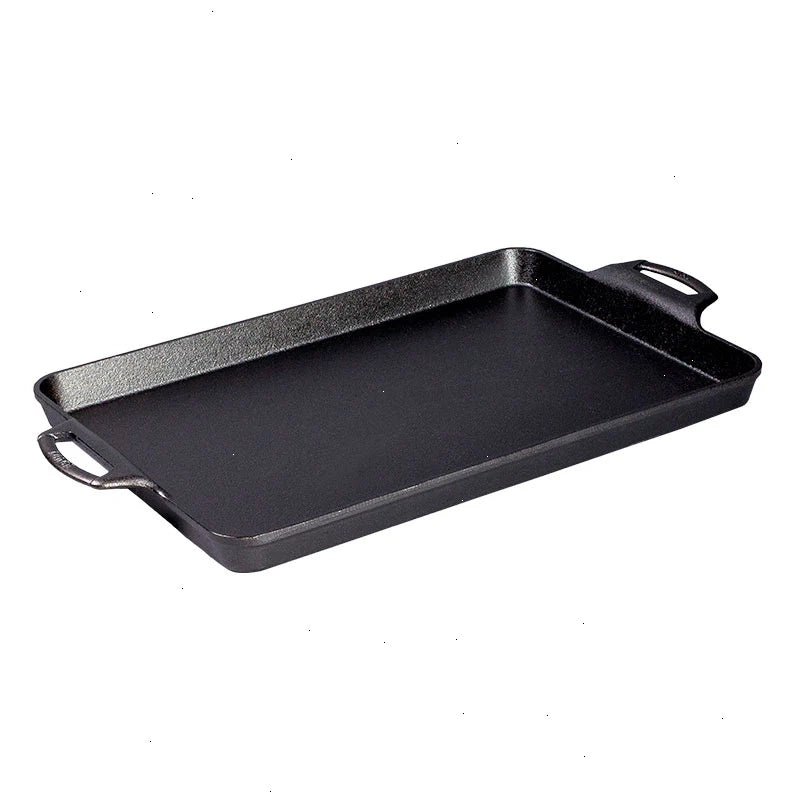
- 15.5 x 10.5 Inch Seasoned Cast Iron Baking Pan: Cast iron bakeware won’t dent, bend, or warp at high temperatures. This is the main durability advantage over glass, which can crack or shatter with thermal shock.

15.5 x 10.5 Inch Seasoned Cast Iron Baking Pan - 15.5 x 10.5 Inch Seasoned Cast Iron Baking Pan: The naturally seasoned cooking surface is ready to go, straight from the foundry. You can bake without a separate seasoning step, and the surface supports browning.
- 15.5 x 10.5 Inch Seasoned Cast Iron Baking Pan: Great heat retention helps you get perfect bakes every single time. Steady heat is the key to even baking, especially for cookies and sheet cakes.
- 15.5 x 10.5 Inch Seasoned Cast Iron Baking Pan: The pan is nontoxic, naturally seasoned, and made without PFAS. This matters if you want to avoid synthetic coatings and prefer a simple, traditional material.
Where glass still makes sense
Glass baking dishes are a good fit when you want to check browning without opening the oven, when you need a lighter pan, or when you plan to serve directly from the dish. They are also often less expensive and available in many sizes. For custards, casseroles, and dishes where you want to see the layers, glass is a practical choice.
However, glass is not as forgiving with sudden temperature changes. Avoid placing a hot glass dish on a cold surface or adding cold liquid to a hot dish. And if you frequently bake at high temperatures or want a pan that can go from oven to broiler (check your pan’s manufacturer guidelines), cast iron is the more robust option.
Cast iron baking pan uses that play to its strengths
The Lodge 15.5 x 10.5 Inch Seasoned Cast Iron Baking Pan is sized for sheet-pan tasks: cookies, sheet cakes, roasted vegetables, and similar oven recipes. Its heat retention helps with even browning, and the seasoned surface is ready for baking without extra prep. It is also a good choice for recipes that benefit from a little caramelization on the bottom, like roasted root vegetables or bar cookies.
Keep in mind that cast iron is heavy and requires hand washing and drying to protect the seasoning. The supplied record does not include specific care instructions, so follow Lodge’s general cast iron care guidance for washing, drying, and re-oiling.
What the supplied information does not tell you
The product record does not list exact weight, handle design, maximum oven temperature, or whether the pan is broiler-safe. It also does not provide a specific seasoning procedure or dishwasher recommendation. For those details, check the pan’s packaging or the manufacturer’s website. Glass baking dishes vary widely by brand, so always follow the manufacturer’s temperature and care limits for the specific dish you own.

