Why Braising Needs the Right Pot
Braising transforms tough cuts of meat into tender, flavorful meals by cooking them slowly in liquid. The pot you choose affects heat distribution, moisture retention, and the final taste. Two popular options are the cast iron Dutch oven and the electric slow cooker. Each has strengths, but they work differently.
Key Differences for Braising
Here’s how a cast iron Dutch oven and a slow cooker compare for braising tasks.
- Heat Retention and Distribution: Cast iron Dutch ovens excel at even heat distribution and long heat retention, which is ideal for consistent braising. Slow cookers use low, steady heat from an electric element, but they can have hot spots and don't hold heat as well when the lid is lifted.
- Searing Capability: A Dutch oven can go directly on the stovetop to sear meat before braising, building deep flavor in the same pot. Most slow cookers cannot sear, requiring a separate pan and extra cleanup.
- Versatility: Cast iron Dutch ovens work on the stovetop, in the oven, and over campfires. Slow cookers are limited to countertop electrical use and cannot be used for roasting, baking, or high-heat cooking.
- Flavor Development: Searing and deglazing in a Dutch oven creates rich fond that deepens braising liquid. Slow cookers miss this step unless you sear separately, which adds time and effort.
- Convenience: Slow cookers are set-and-forget appliances; you can leave them unattended for hours. Dutch ovens require occasional attention, especially when searing or adjusting oven temperature.
When a Cast Iron Dutch Oven Shines
If you value deep flavor, want to sear and braise in one pot, and enjoy cooking over different heat sources, a cast iron Dutch oven is the better choice. Its heat retention and versatility make it a favorite for braised dishes like pot roast, coq au vin, and stews.
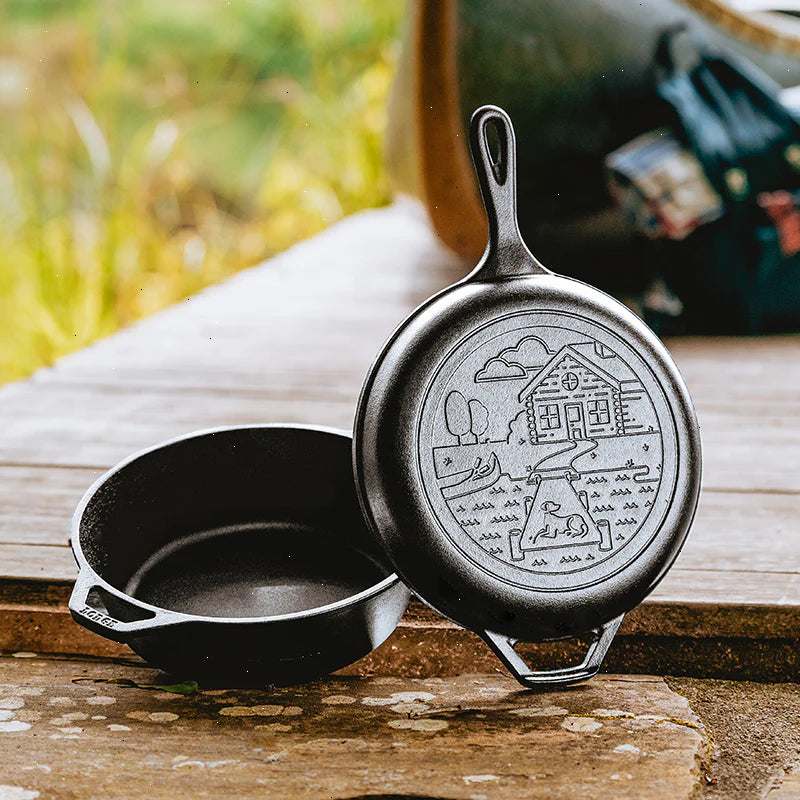
The Wanderlust 3.2 Quart Cast Iron Cabin Combo Cooker is a great example. Its lid doubles as a skillet, so you can sear meat on the stovetop, then flip the lid to use as a cooking surface. This piece is built for durability and heat retention, straight from the foundry with a naturally seasoned cooking surface.
Product at a Glance
- Wanderlust 3.2 Quart Cast Iron Cabin Combo Cooker: Cast iron brings great durability, incredible heat retention, and a naturally seasoned cooking surface that’s ready to go, straight from the foundry. For braising, heat retention ensures even cooking, and the seasoned surface adds non-stick performance without synthetic coatings.

Wanderlust 3.2 Quart Cast Iron Cabin Combo Cooker - Wanderlust 3.2 Quart Cast Iron Cabin Combo Cooker: This piece is extremely versatile, because the lid doubles as a skillet. Searing meat in the same pot that braises saves time and builds deeper flavor, a key advantage over slow cookers.
When a Slow Cooker Makes Sense
A slow cooker is ideal for busy days when you want to start a meal in the morning and come home to a finished dish. It requires no stovetop monitoring and is generally safer to leave unattended. However, you’ll need to sear meat separately if you want the same depth of flavor a Dutch oven provides.
Which Should You Choose?
For the best braising results, a cast iron Dutch oven is the superior tool. It sears, braises, and roasts in one pot, delivering richer flavor and more cooking options. A slow cooker offers convenience but sacrifices flavor development and versatility. If you already own a Dutch oven, you likely don’t need a slow cooker for braising. If you’re buying your first pot, a cast iron Dutch oven like the Wanderlust Combo Cooker gives you more for your money.

